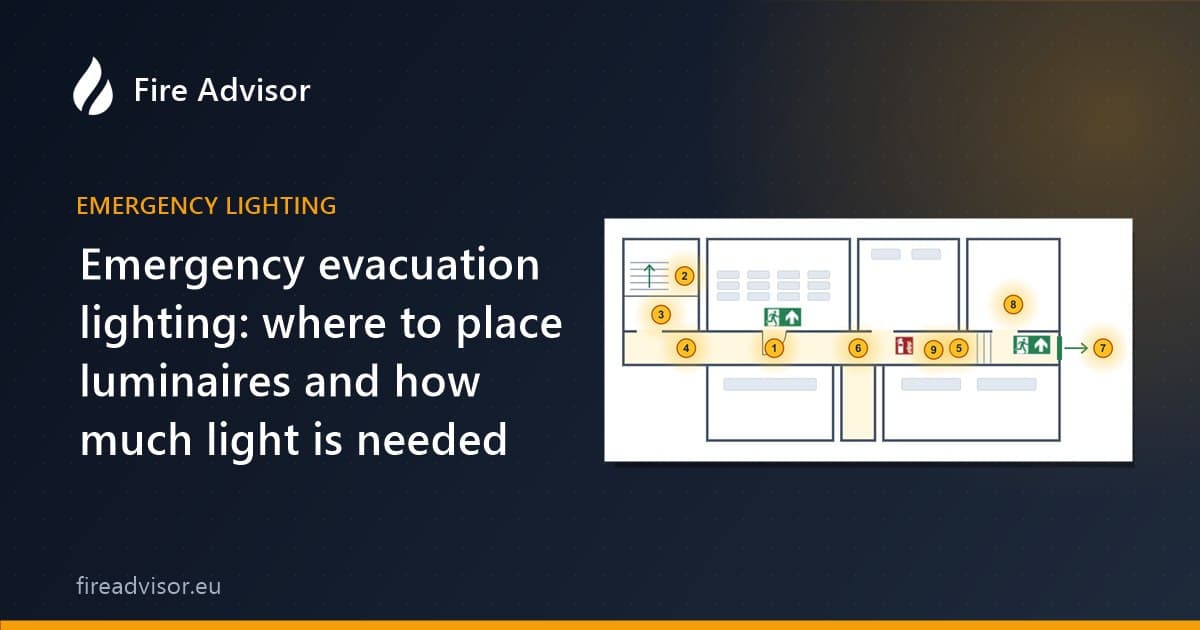
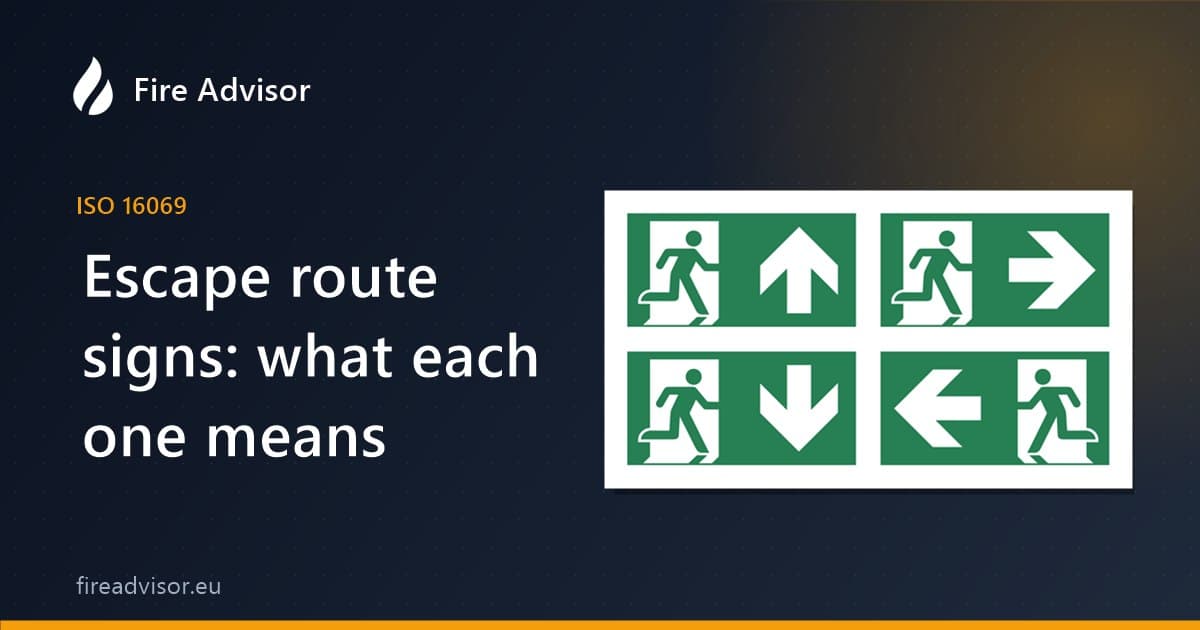
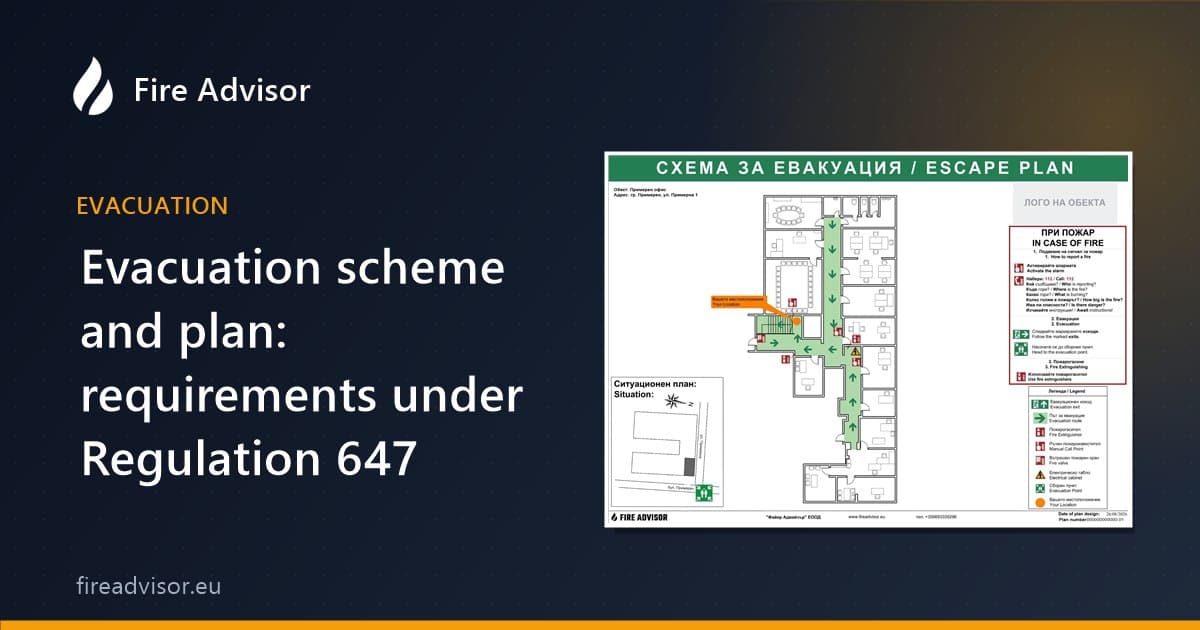
Active systems — fire detection, fire suppression, smoke and heat control — are triggered by a fire. Passive protection is permanent: it is in the walls, floors, doors and seals, and it limits the spread of fire. Below are the requirements of the regulations and the kinds of products used to meet them — with examples from Protecta's products.
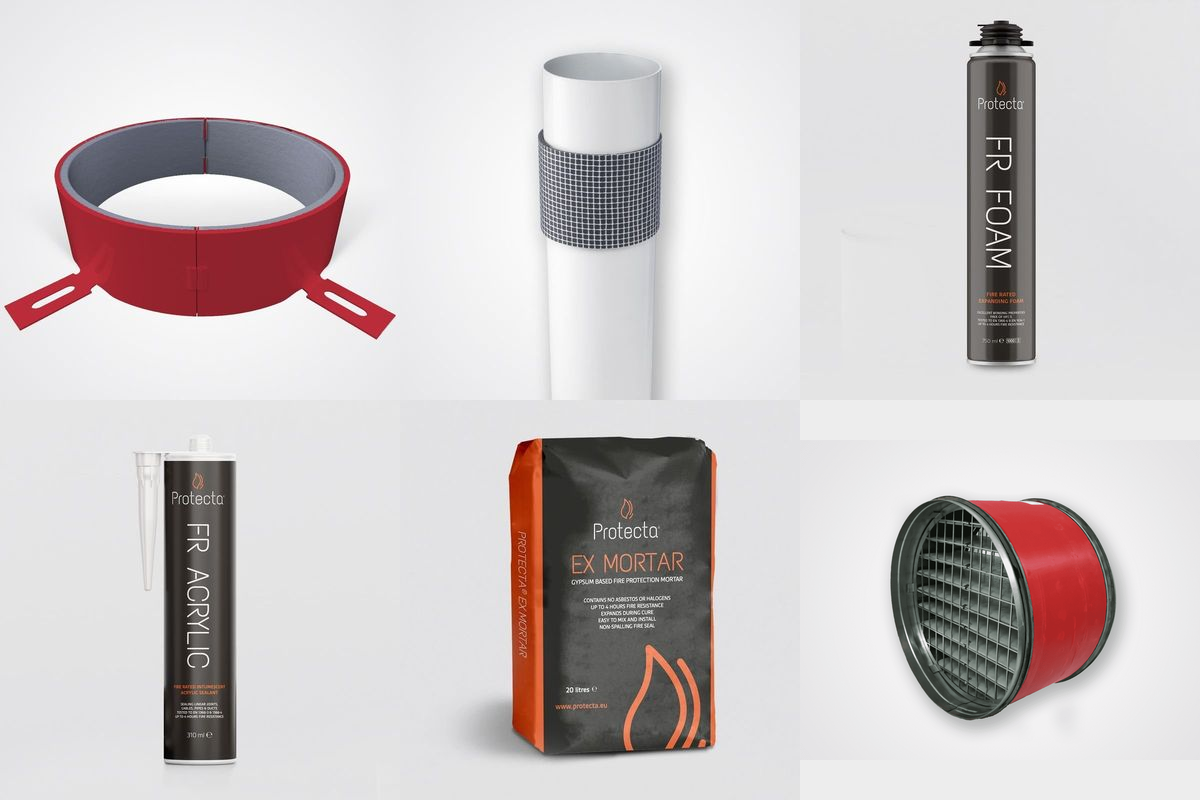
Photos: Protecta. Used through our partner Red Birch, which holds the rights to them.
In short
- Fire barriers prevent the spread of fire and of the products of combustion to adjacent rooms.
- Fire compartment barriers have a minimum fire resistance of REI (EI) 120, and the doors in them — EI 90.
- Every opening for pipes, cables and other services and every linear joint through a barrier is sealed without reducing the fire resistance of the barrier.
- Sealing systems have a fire resistance class under two-sided fire exposure.
- Fire doors are checked at least once a year.
How fire resistance is measured
Fire resistance is assessed by three criteria:
- R — load-bearing capacity: the ability of a structure to keep its stability under fire from one or more sides for a given time;
- E — integrity: the ability of an element to stop flames and hot gases from passing to the unexposed side;
- I — insulation: the ability to prevent intense heat transfer to the unexposed side, so that nothing close to it ignites.
Load-bearing elements require R, load-bearing separating elements — R, E and I, and non-load-bearing separating elements — E and I. That is why you see REI and EI, followed by minutes — for example EI 90.
Elements, structures and installations are classified under the BDS EN 13501 series of standards. Fire resistance is determined on the basis of tests, calculations or comparisons with tables.
Fire compartments and barriers
Fire compartments divide the building so that a fire does not spread from the part where it started to the rest. Compartment barriers are:
- made of products with a reaction-to-fire class not lower than A2;
- of a minimum fire resistance of REI (EI) 120;
- with openings of a total area of up to 25% of the vertical barrier and up to 10% of the horizontal one. Openings are protected with self-closing doors, hatches or closing devices of a minimum fire resistance of EI 90;
- with non-opening glazing of fire resistance EI 120. Openable windows in them are not permitted.
The vertical barriers of fire compartments on the top floor are designed to continue in an unbroken vertical plane through the roof space. An example of a product for compartmenting roof cavities: Protecta FR Membrane Barrier.
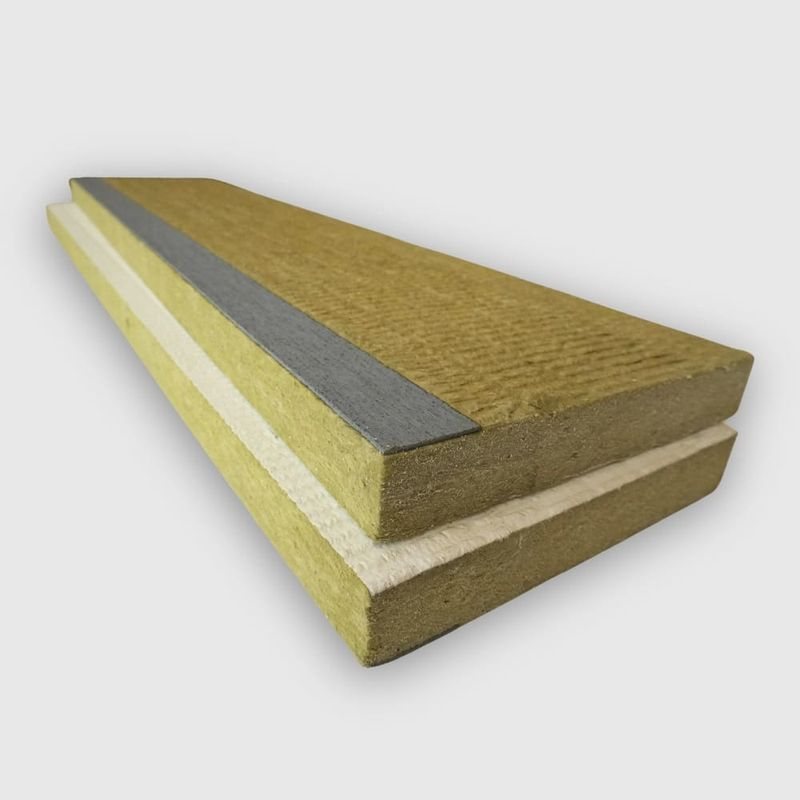
Photo: Protecta. Used through our partner Red Birch, which holds the rights to it.
Sealing openings and joints
Pipes, cables, ducts and cable trays pass through walls and floors. The openings through which they pass are sealed without reducing the normative fire resistance of the barrier. The same applies to linear joints crossing fire barriers.
Here are the six most common cases and the real Protecta products used for them:
- 1
Plastic and metal pipes through a wall or floor
Openings through which pipes pass are sealed without reducing the fire resistance of the barrier.
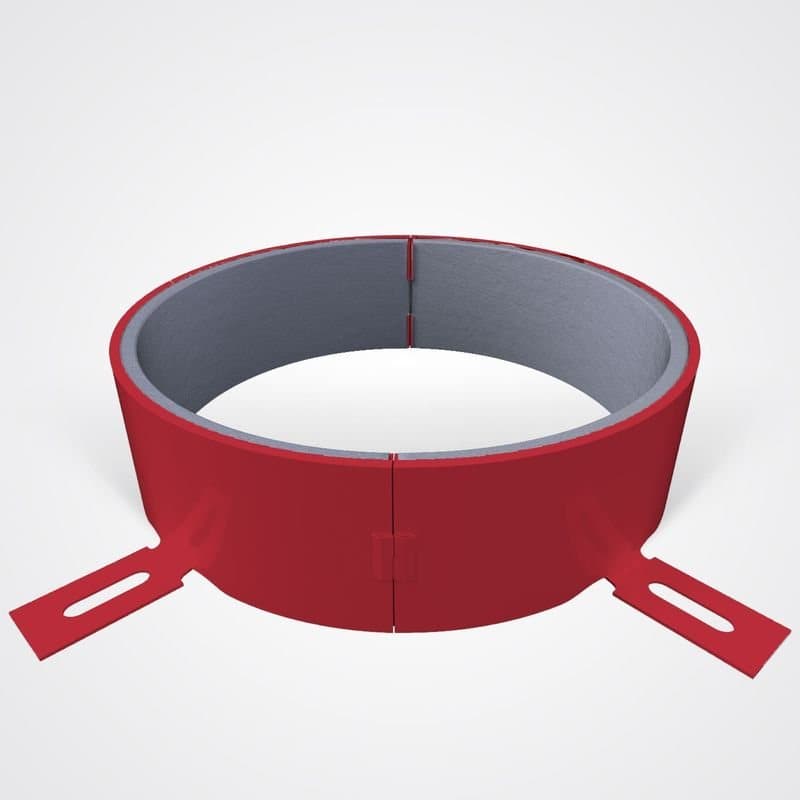
Protecta FR Collar
Collar for services passing through walls and floors
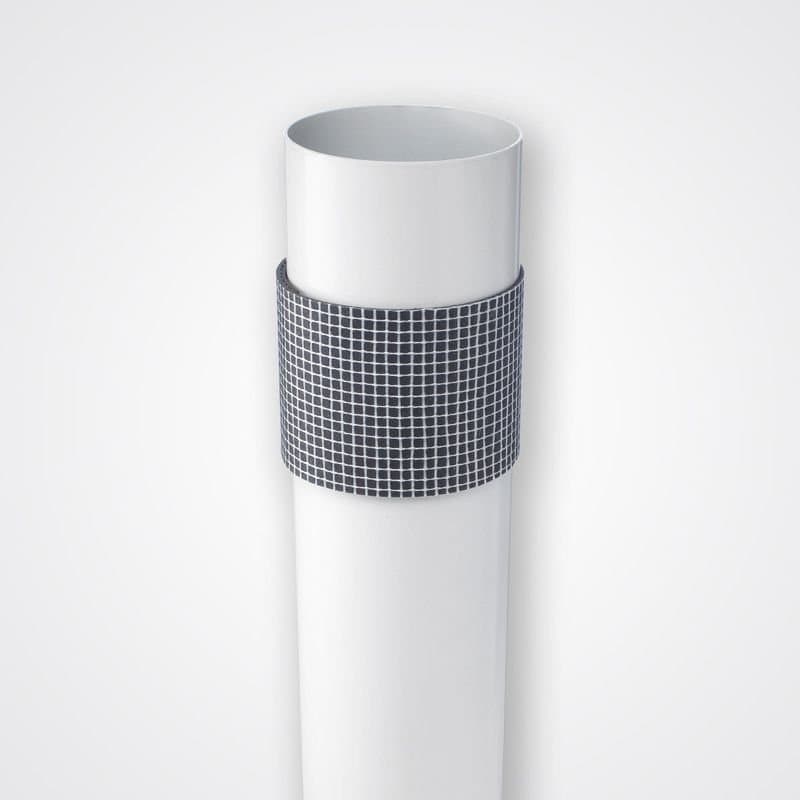
Protecta FR Pipe Wrap
Wrap for plastic and metal pipes through walls and floors
- 2
Cables and cable routes
Openings through which cables and other services pass are sealed without reducing the fire resistance of the barrier.
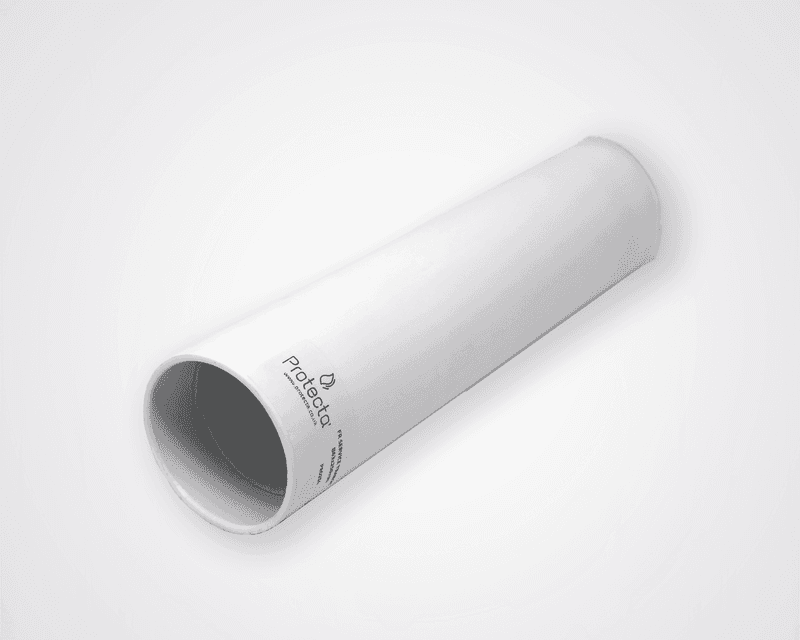
Protecta Service Transit
Continuous cables and plastic pipes through walls and floors
- 3
Linear joints
Linear joints crossing fire barriers are sealed without reducing their fire resistance.
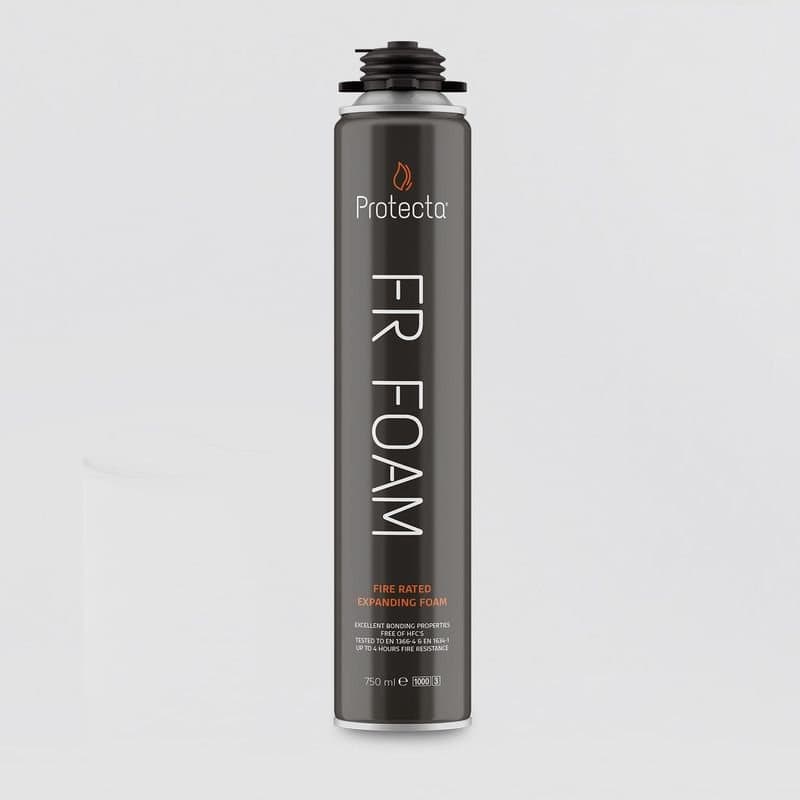
Protecta FR Foam
Foam for filling linear gaps in drywall, concrete and masonry
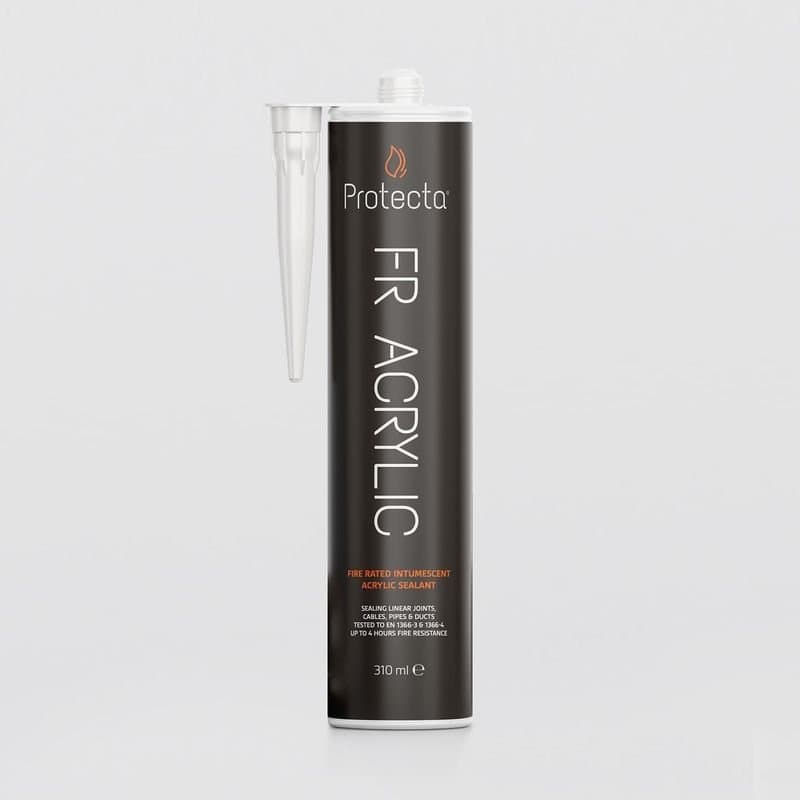
Protecta FR Acrylic
Sealant for joints and openings in fire-rated walls and floors
- 4
Large openings with several services
Sealing systems have a fire resistance class under two-sided fire exposure.
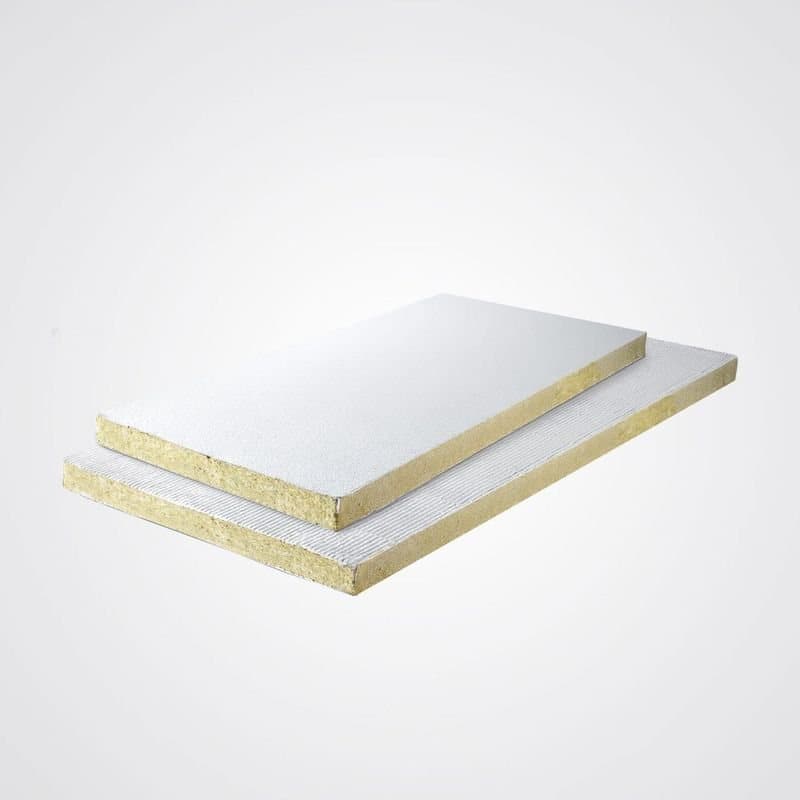
Protecta FR Board
Board for openings in walls and floors with multiple services

Protecta EX Mortar
Dry powder fire sealing compound
- 5
Ventilation ducts
Where a duct passes through a fire barrier, its thermal insulation is interrupted with products of reaction-to-fire class not lower than A2.
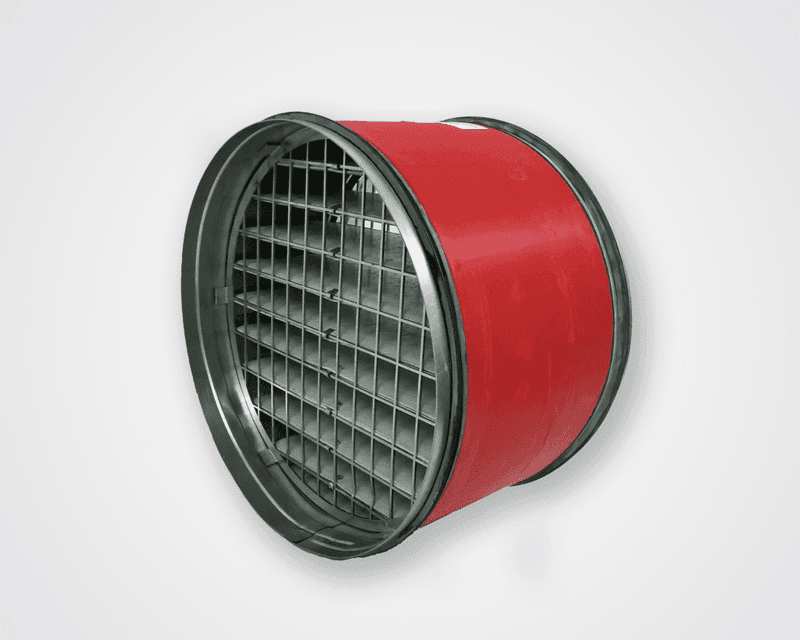
Protecta FR Damper
Fire protection of ventilation ducts through fire-rated constructions
- 6
Sockets and switches in light walls
Openings and services through fire barriers are sealed without reducing the normative fire resistance of the barrier.
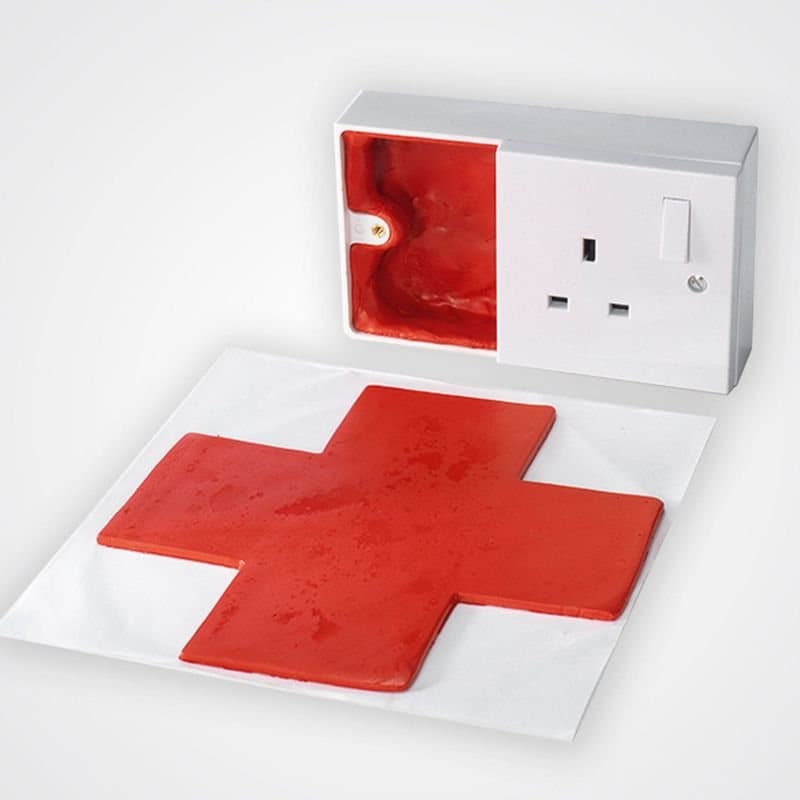
Protecta FR Putty Pad
Non-setting putty pad for sockets and switches
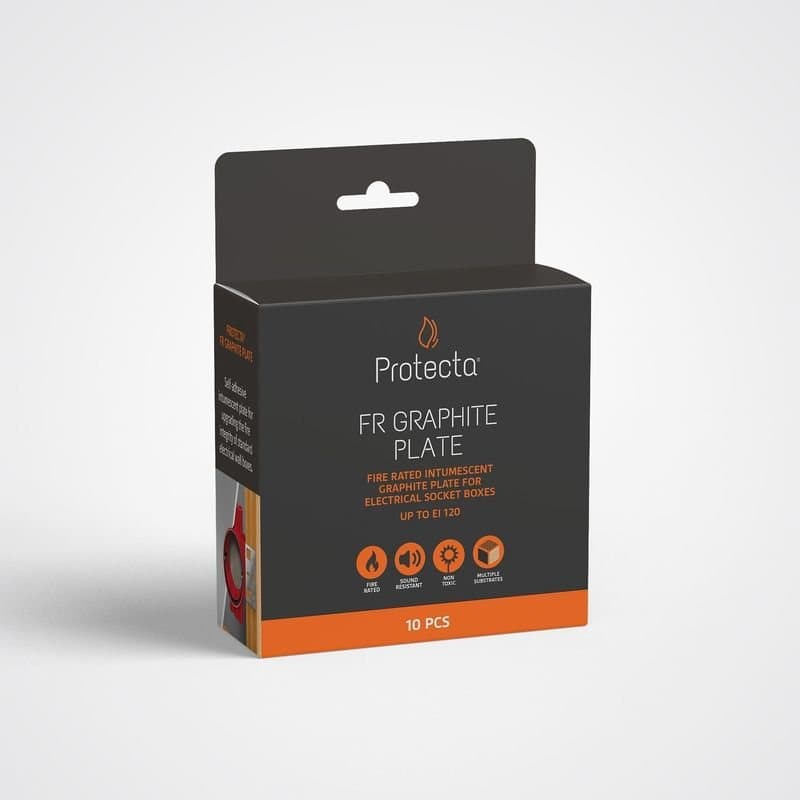
Protecta FR Graphite Plate
Intumescent plate for plastic wall boxes in flexible walls
What to keep in mind:
- System class. Systems sealing openings and linear joints in fire barriers (except horizontal ones) have a fire resistance class under two-sided fire exposure. The requirement is for the sealing system, not only for the product.
- Reaction to fire. Products used to seal openings have a reaction-to-fire class not lower than A2 in buildings of fire resistance degrees I and II and not lower than C in degree III buildings.
- Pipe insulation. Where pipes pass through fire barriers, thermal insulation is made of products of reaction-to-fire class A1L.
- Ducts. Where a duct passes through a fire barrier, its thermal insulation is interrupted with products of reaction-to-fire class not lower than A2.
Fireproofing of steel structures
To ensure the fire resistance of structures, coating products — intumescent paints, compounds and claddings — and technical solutions are used, depending on the section, the number of sides heated and the section factor of the profiles.
The fire resistance of load-bearing steel elements is determined through their load-bearing capacity (R). The critical temperature of steel may be determined under the Eurocodes or taken as follows:
- 550 °C — for elements heated on four sides with I, H and other open sections, and for circular hollow sections;
- 500 °C — for elements heated on four sides with a rectangular hollow section;
- 600 °C — for elements heated on three sides with I, H and other open sections.
An example of a kind of product: the acrylic steel paints Protecta Steel Paint FR-1 and FR-120, which according to the manufacturer give protection for up to 60 and up to 120 minutes.
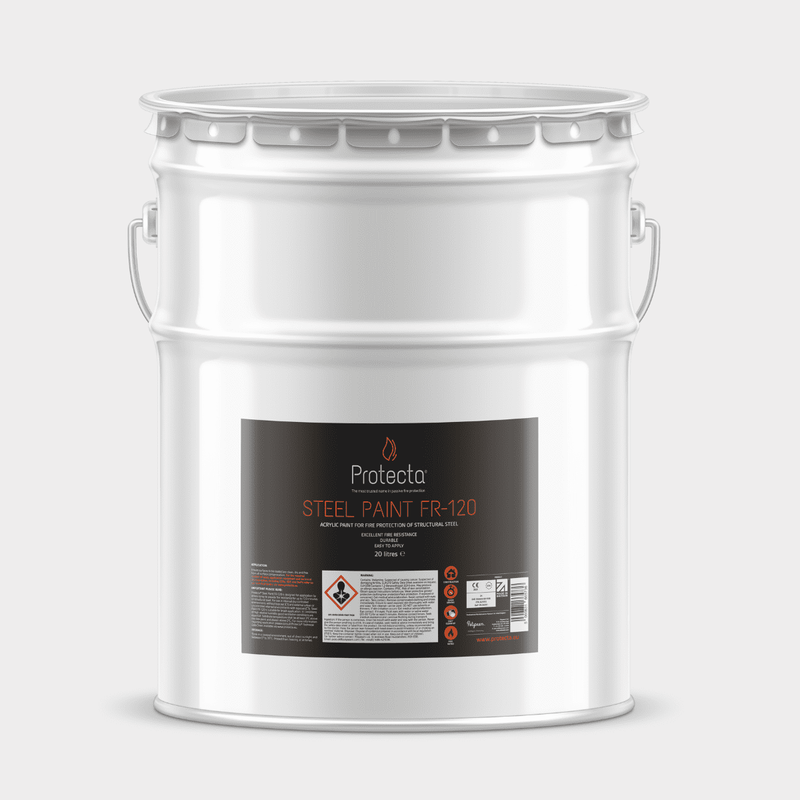
Photo: Protecta. Used through our partner Red Birch, which holds the rights to it.
Fireproofing is determined according to the section, the number of sides heated and the section factor of the profiles.
The reaction-to-fire classes of coatings on interior surfaces — walls, ceilings, floors and columns — are set in table 7 of Regulation Iз-1971. An example of a decorative fire-resistant coating: Protecta Interior Paint FR-1, for which the manufacturer states class B s1 d0 under BDS EN 13501-1.
Fire doors
Doors in fire barriers have a fire resistance class under two-sided fire exposure. Doors that are required to be self-closing meet at least class C1 or C3, depending on their type.
Under Regulation № 8121з-647, the control of fire doors and smoke-tight doors is carried out by the owner (manager) of the facility or by the fire safety officers through checks at intervals of up to 1 year, following the manufacturer's instructions. Facilities of subclasses Ф1.3 and Ф1.4 are exempt. Checks are recorded in a log when the facility has more than 5 doors, and the manager of the facility is notified in writing of every fault.
Maintenance
Facilities are kept in the technical condition in which they were put into operation. The sealing requirement applies to every opening through a fire barrier, including those made later — for a new cable, a new pipe or a new duct.
How we choose a solution
We solve specific passive fire protection cases — we determine what the penetrations are, what class is needed and which system is suitable — and we supply the materials. We are partners of Red Birch — the exclusive representative for Bulgaria of the UK manufacturer Protecta — and offer its products directly. The photos in this article are Protecta's and are used through Red Birch, which holds the rights to them. The product names are the manufacturer's and are given as examples of a kind of product. Before choosing a system, its classification for your barrier is checked.
For our services see passive fire protection and structural fireproofing. Protecta's products are in the manufacturer's catalogue.
Checklist
- Are all openings for pipes, cables and ducts through fire barriers sealed?
- Are the linear joints crossing them sealed?
- Does every system have a fire resistance class under two-sided fire exposure?
- Do the sealing products have a suitable reaction-to-fire class?
- Are the doors in fire barriers self-closing and of the required class?
- Are fire doors checked at least once a year and is a log kept?
- Is the seal restored after every new installation?
If you are not sure what your facility needs, get in touch.